The Highland blog
Ice Dams: What a Roof Can and Cannot Fix
By Highland Roofing3 min read
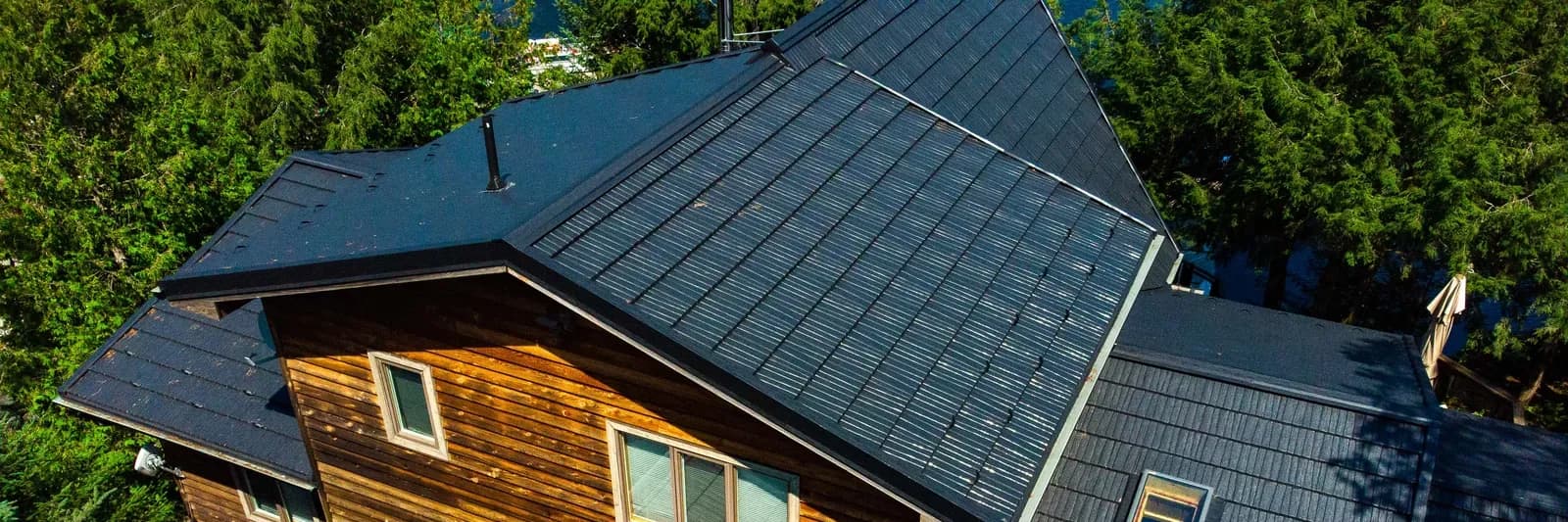
An ice dam is a ridge of ice at the edge of a roof that stops meltwater draining. Water backs up behind it, sits there, and eventually finds its way under the covering and into the building. In Ontario it is one of the most common causes of winter water damage.
It is also one of the most commonly misdiagnosed, because it looks like a roof problem and usually is not.
Why it forms
Ice dams need three things at once: snow on the roof, a roof surface warm enough in the middle to melt it, and an edge cold enough to freeze it again.
The middle of the roof is warm because heat is escaping from the house into the roof space. Snow above that area melts. The water runs down, reaches the eaves, which overhang open air and are therefore at outdoor temperature, and refreezes. Repeat this over several days and the ridge of ice grows until meltwater has nowhere to go but sideways and up, under the roof covering.
Notice what is doing the damage: heat leaving the house. The roof covering is the surface it happens on, not the cause.
What a metal roof genuinely helps with
Metal does help, and it is worth being precise about how.
- Less snow sits there. Snow releases from metal rather than accumulating all winter, so there is less material available to melt and refreeze.
- The surface is smooth. Water that does run finds fewer places to catch.
- Water gets away faster. Less standing meltwater at the edge means fewer chances to freeze.
- A properly built assembly is better ventilated. The strapping grid and the ventilation path both reduce how warm the underside of the roof gets in the first place, which is the actual mechanism.
That last one matters more than the metal. A well-ventilated roof with a cold deck is the real defence, and it is available under any covering.
What it cannot fix
If your attic is under-insulated, if the insulation has been pushed into the eaves and blocked the intake vents, if there are gaps around light fittings and hatches letting warm humid air straight up, or if there is ductwork in the roof space losing heat, then heat is still reaching your roof deck and ice can still form.
A new roof over an unchanged attic is a new surface for the same problem.
Anyone who tells you a metal roof means you will never see an ice dam again is either not thinking about it or hoping you will not.
The things that actually work
- Air sealing. Stopping warm air leaking from the living space into the roof space. Usually the highest-value fix and the least visible.
- Insulation, at the right depth and in the right place. Including not blocking the eaves.
- A clear ventilation path. In at the soffits, out at the ridge, uninterrupted.
- Good detailing at the eaves. Membrane coverage where backed-up water would reach, and a drip edge that hands water to the eavestrough rather than behind it.
- Eavestroughs sized and positioned for the roof. Overflowing gutters make the edge wetter and colder.
What to ask when you get a quote
If you have had ice at the eaves, say so early and be specific about where. Which side of the house, whether it happens every year, whether there has ever been a stain on a ceiling below it.
Then ask what the roofer proposes to do about the cause rather than the symptom, and whether they will look in the attic as well as on the roof. The answer tells you a lot.
Tell us where the ice forms and we will look at the whole assembly rather than just the covering.