The Highland blog
Where the Snow Goes, and Why We Fit Snow Guards as Standard
By Highland Roofing3 min read
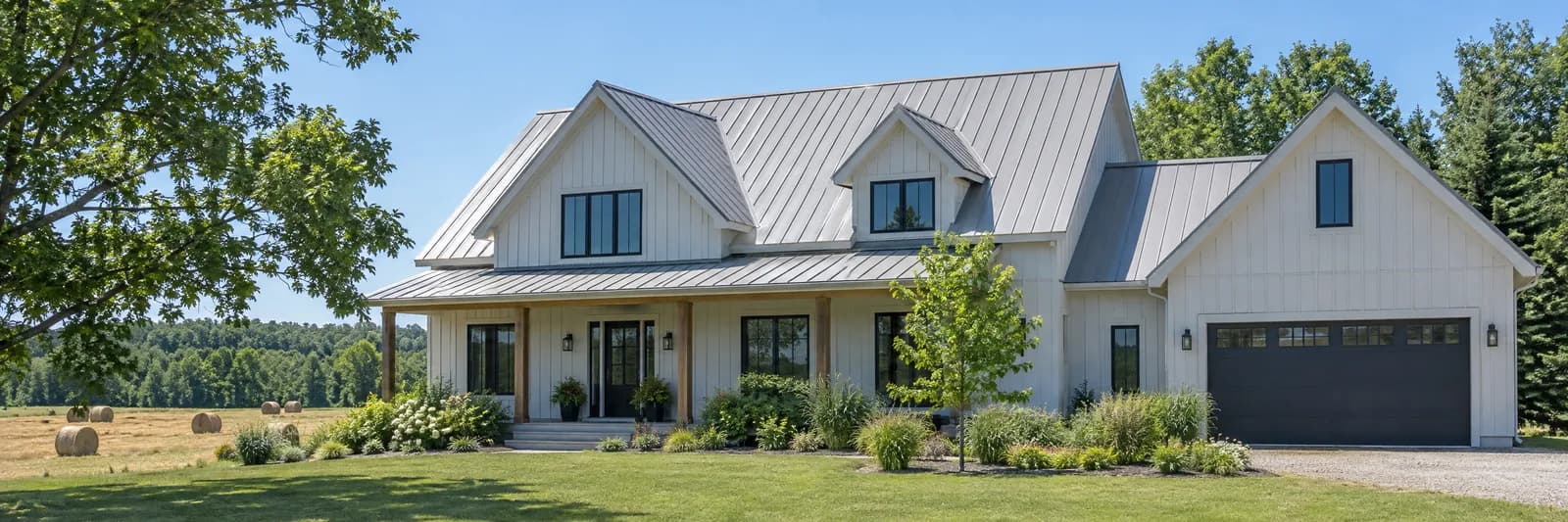
Every metal roofing company in Ontario will tell you that metal sheds snow instead of holding it. It is true, and it is genuinely useful: less accumulated weight on the structure and less of the standing snow that feeds ice at the eaves.
What gets said less often is that snow leaving a roof has to arrive somewhere, and that a full slope of snow releasing at once is not a gentle event.
What actually happens
Snow does not slide off a metal roof gradually. It sits there, sometimes for weeks, bonded to the surface. Then a mild afternoon or a bit of sun melts the thin layer in contact with the panel, the bond breaks, and the whole mass moves at once.
A roof's worth of wet snow is heavy, and it arrives with momentum. Where it lands matters.
The places it should not land
- Doorways and walkways. The obvious one, and the one that turns a roof into a hazard.
- Decks, railings and steps. Especially on cottages where the deck runs along the eaves side.
- The eavestroughs. A gutter takes the full weight of a release on the way past. This is a common reason for a run of eavestrough to sag or tear away, and people usually blame the gutter.
- Anything parked underneath. Cars, boats, equipment, the barbecue you meant to move.
- Lower roofs. A release from an upper slope onto a porch or extension roof concentrates a lot of load onto a small area.
- Plants you care about. Less serious, but people are surprised every spring.
What snow guards do, and what they do not
Snow guards are fixed to the roof to hold snow in place so it releases gradually, in smaller amounts, rather than all at once. They do not stop snow leaving. They change it from an event into a process.
They are not universal. On a plain slope facing an empty field, snow can drop where it likes. The point of designing them is deciding which slopes need controlling and which do not, based on what is underneath each one.
Why we fit them as standard
Highland includes snow guards in the roof rather than quoting them separately.
The reason is simple: they are cheap while the crew is on the roof and expensive afterwards, and the situations that need them are obvious from the ground during a site visit. Treating them as an optional extra means some roofs get sold without them, and the people most likely to decline are the people who have never seen a metal roof release.
It also means that when you compare our quote against one that does not include them, you are looking at two different scopes of work. Worth checking.
The honest caveat
Snow management is not the same as ice prevention, and nobody should tell you a metal roof means you will never see ice again. Ice at the eaves is driven by heat escaping from the house into the roof space, and that is an insulation and ventilation problem more than a covering one. A metal roof helps, because less snow sits on it. It does not exempt the building from physics.
If you have doorways, decks or eavestroughs under a slope, mention it when you ask for a quote, and we will talk about where the snow on your roof is going to end up.