The Highland blog
What Happens to Your Garden, Deck and Driveway During a Roof
By Highland Roofing3 min read
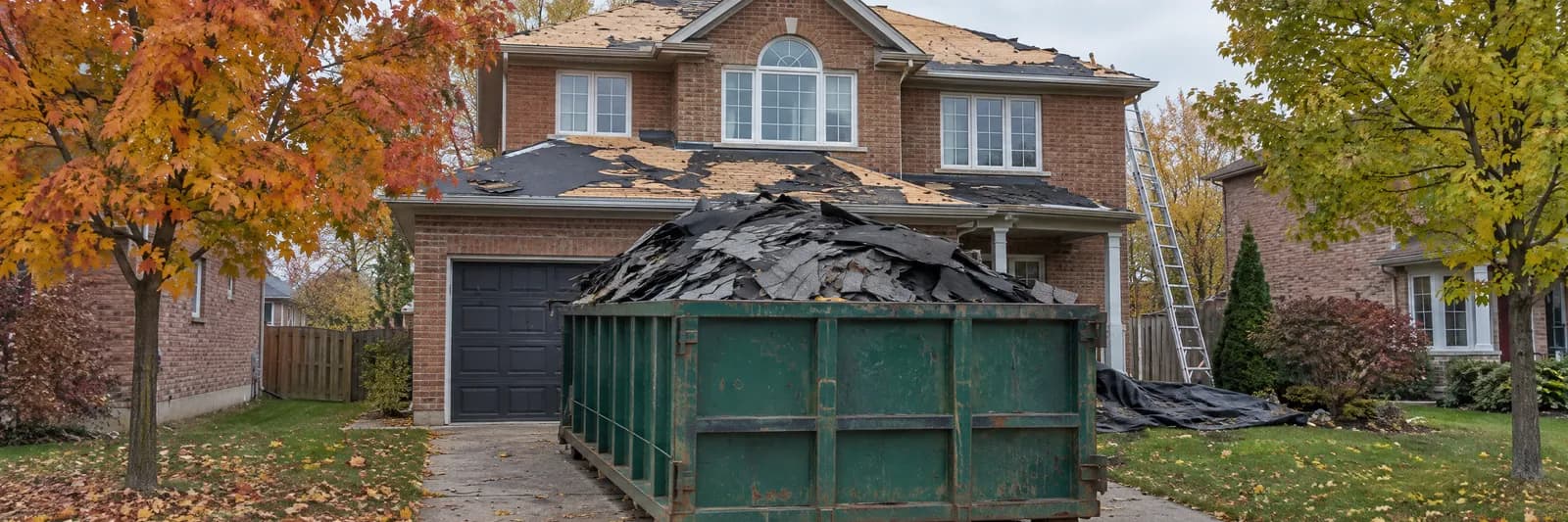
People ask a great deal about the roof and almost nothing about the two metres of ground all the way around the house, which is where the old roof is going to land.
Stripping a roof is a demolition job carried out above your garden. Everything that comes off has to come down, and nails, offcuts and debris do not fall neatly.
What is actually at risk
- Planting beds along the eaves. The most exposed and the slowest to recover.
- Decks, patios and stonework. Dropped material chips stone and dents softwood.
- The driveway. Skips, material deliveries and nails.
- Air conditioning units, pool equipment, rain barrels. Usually sited exactly where debris falls.
- Windows and screens. Particularly on the side where material is being lowered.
- The lawn. Nails in grass are the complaint that outlasts every other one, because they turn up months later in a bare foot or a tyre.
What good protection looks like
Reasonable practice on a residential roof includes covering beds and shrubs before anything comes off, protecting hard surfaces where material will land, keeping a defined drop and loading zone rather than working over the whole perimeter, and clearing up at the end of each working day rather than only at the end of the job. That last one should be in the contract, not a favour.
Daily cleanup matters more than it sounds. A site that is tidied every evening is a site where nobody is walking over accumulated debris the next morning, and it is much harder to lose track of what has fallen where.
The last pass should include going over the perimeter with a magnet. Nails are the single most common thing homeowners are still finding weeks later, and a magnetic sweep is quick and effective.
What you can do beforehand
- Move vehicles off the driveway and keep them off for the duration.
- Move garden furniture, planters and anything breakable away from the house.
- Take pictures down from walls on the top floor. Roofing is percussive and things fall.
- Point out anything precious before work starts: a particular shrub, a stone feature, a septic bed, a well cover.
- Keep pets indoors, and tell the crew if children will be around.
- Say where you would rather material was not stacked.
The questions to ask
Before the job, not during it.
- What gets covered before you start, and what do you use?
- Where will the skip go, and where will materials be stacked?
- Do you clean up daily or at the end?
- Do you do a magnetic sweep, and over what area?
- Who do I speak to on site if something concerns me?
That last one is worth having an answer to before you need it.
How Highland works
Removing the old roof and cleaning up are both in Highland's standard contract rather than added afterwards, and the cleanup happens at the end of each working day rather than once at the end of the job. Customers writing about Highland on HomeStars have described protection of stonework and decking and clearing up daily.
We would still rather be told in advance about the things that matter to you than apologise for them later.
If you have something specific you are worried about, raise it when you request a quote and it can be planned rather than improvised.