The Highland blog
Metal Roofing for Barns, Shops and Farm Buildings
By Highland Roofing3 min read
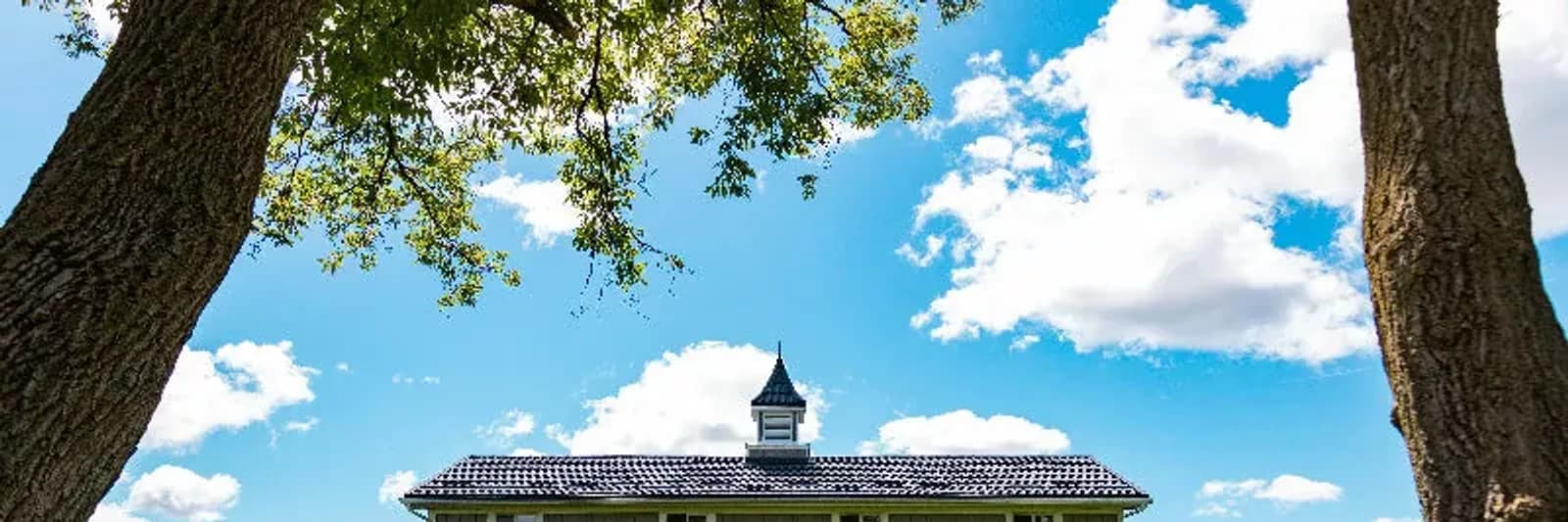
Metal has been the default on Ontario farm buildings for a long time, and for good reasons: it covers large areas efficiently, it is light relative to what it spans, and it lasts.
But an agricultural or workshop roof is not a house roof scaled up. The building is put together differently, and the problems are different.
What is structurally different
Most farm buildings have no solid deck. The panels span between purlins, with open air behind them, and often no ceiling below that. On a house there are five or six layers between the panel and the room. Here there may be none.
That single difference drives most of what follows.
Condensation is the main enemy
In an unheated building with no vapour barrier and no insulation, the underside of a metal roof gets cold at night. Moist air inside, from livestock, stored crops, machinery brought in wet, or simply a damp Ontario evening, condenses on it.
Then it drips. On stored hay, on equipment, on anything below.
People often assume the roof is leaking. It is not. Water is forming on the inside surface, and no amount of sealing the outside will change it.
The answers are ventilation, and where appropriate an anti-condensation treatment or an insulation layer. Which one depends on what the building is for, and it is worth deciding deliberately rather than discovering the problem in year one. How to stop a metal roof sweating goes through each option.
What the building is actually for
Specification should follow use, and these are genuinely different requirements.
- Livestock housing. High humidity and, in some cases, corrosive atmospheres. Ventilation and finish selection matter more here than anywhere.
- Crop and hay storage. Condensation dripping onto stored product is the specific failure to design out.
- Machinery and implement sheds. Usually the simplest case. Keep the water off, expect wet equipment inside.
- Workshops. Frequently heated intermittently, which is the hardest condition of all, because the building goes through the dew point regularly.
- Riding arenas and large clear spans. Big uninterrupted areas, significant snow loads, and a lot of roof to move.
Snow and span
Large roofs carry large loads, and where snow releases from a long agricultural slope it arrives in quantity. Doorways, feed areas, walkways and anywhere people or animals routinely stand are worth thinking about before rather than after.
It is the same principle as a house, with more roof above it.
Noise, and the honest answer
Rain on a metal farm roof is loud, and it is loud precisely because there is nothing between the panel and the space below. This is where the reputation that follows metal roofing everywhere actually comes from, and on a bare-purlin building it is fair.
If the building is a workshop where people spend the day, that is worth raising, because a ceiling or an insulation layer changes it substantially. On a house it is a non-issue for reasons we have written about separately.
What to tell a roofer
What the building is used for, whether it is heated, whether anything inside would be damaged by drips, what the spans are, and whether there is an existing ceiling or insulation. Those five things determine most of the specification.
Highland roofs agricultural and commercial buildings as well as houses across the Greater Toronto Area and cottage country. Tell us about the building.