The Highland blog
Cleaning Eavestroughs: How Often, and What to Look For
By Highland Roofing3 min read
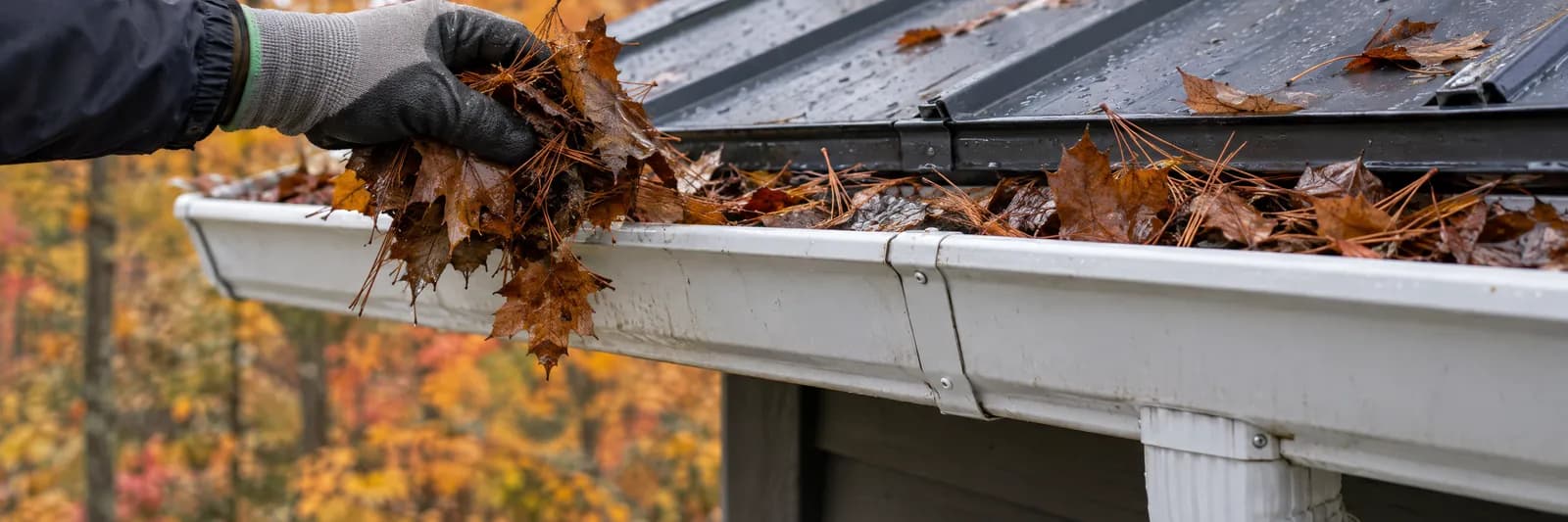
Eavestroughs are one of those things nobody thinks about until water is pouring over the front of them onto the front step. By then they have usually been blocked for a while, and the water has been going somewhere it should not.
Why it matters more than it looks
A blocked trough is not just an overflowing trough. When water cannot get away, it backs up and runs behind the eavestrough, soaking the fascia board and getting into the soffit. In winter it freezes in the trough and adds weight that pulls the hangers loose. Water that spills over the front lands beside the foundation, which is the last place you want it.
Most rotten fascia we replace was rotted by a blocked eavestrough. Soffit and fascia explained covers what happens behind the trough.
How often
The standard advice is twice a year, in late spring and again once the leaves are down in late autumn. That is a reasonable default, but the trees around your house decide the real answer:
- Maples and oaks drop everything in a few weeks in autumn. One good clean after the leaves fall does most of the work.
- Maple keys and blossom arrive in spring and pack into a wet mat.
- Pines and other conifers drop needles all year, and needles slip through gaps that stop leaves. Cottages in the trees may need clearing more than twice a year.
- No trees nearby may mean once a year is enough, though roof grit and windblown debris still build up.
Signs they need doing now
- Water spilling over the front edge in a normal rain.
- Plants or seedlings growing in the trough.
- A downspout that stays dry while the trough overflows.
- Sections that sag, or hangers pulling away from the fascia.
- Staining or peeling paint on the fascia or the wall below.
- Icicles along the front edge in winter, a sign that water has been sitting and freezing.
What to check while you are up there
If you clean your own troughs, it is worth spending a minute on each run:
- The joints. Most eavestrough systems, including the modular system Highland installs, are assembled from lengths, corners and outlets joined with connectors. Look for drips or staining at each joint.
- The slope. Water left standing in the trough a day after rain means a section has dropped and needs re-hanging.
- The outlets and downspouts. Flush each downspout with a hose. If water backs up, the blockage is usually at an elbow.
- Where the water ends up. Downspouts should discharge well away from the foundation, not beside it.
Doing it safely
Most eavestrough cleaning is ladder work, and ladder falls are a common cause of serious injury at home. Use a ladder in good condition on firm, level ground, keep three points of contact, move the ladder rather than reaching, and stay away from overhead power lines. Do not walk on a metal roof to reach the troughs. Panels can dent and are slippery when wet. If the roofline is high or the ground is uneven, it is not worth the risk.
When the problem is the trough
Some eavestroughs overflow because they are too small for the roof above them, sloped wrong, or simply worn out. No amount of cleaning fixes that. If yours leak at every joint, sag between hangers or have been patched more than once, replacement is likely the better answer. The system Highland installs carries a 40-year manufacturer warranty; the eavestrough range shows the components.
And if the main problem is leaves and needles, do gutter guards work covers what guards can and cannot do. If you would like someone to look at your troughs, get in touch.