The Highland blog
Finding a Roof Leak: Why the Stain Is Rarely Under the Hole
By Highland Roofing3 min read
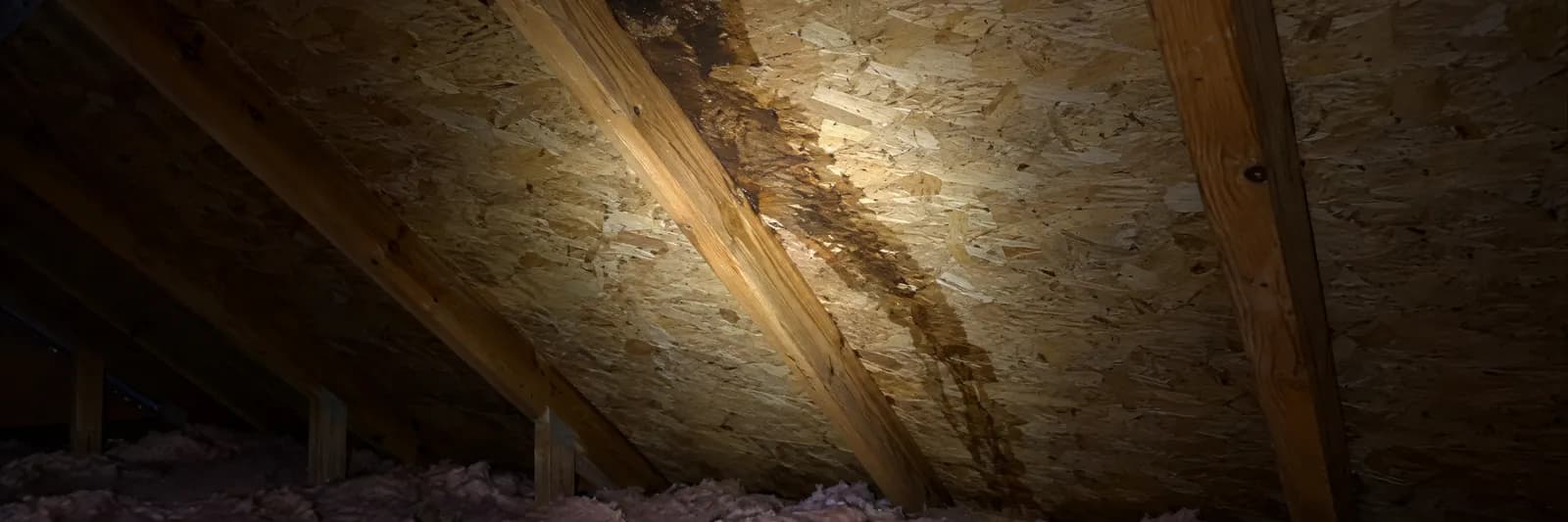
The stain on the ceiling tells you there is a leak. It almost never tells you where. Water that gets through a roof runs along the underside of the deck, follows a rafter, drops onto a vapour barrier and travels again before it finds a way down. The stain can be several feet from where the water got in, sometimes on the other side of the room.
That is why the first patch often does not fix it. Here is how leaks are actually found.
First, deal with the water
- Put a bucket under the drip and move anything valuable out of the way.
- If water is near a light fixture or anything electrical, turn off that circuit at the panel.
- A ceiling that is bulging with water needs attention quickly. If you are not sure what to do, keep people out from under it and call for help.
- Do not go on the roof in the rain, or when it is icy. No leak is worth the fall.
How leaks are traced
Start in the attic, if you can get into it safely, with a good flashlight. Find the wet spot or the stain on the underside of the deck, then follow it uphill. Water runs down, so the entry point is above and usually upslope from the first wet area. Look for staining along rafters, damp insulation, rusty nails and daylight.
Then compare what you found with what is on the roof above. The usual culprits sit right where water has to be turned aside.
The usual culprits
- Chimney flashing. The most common source of leaks on almost any roof. Failed counter-flashing, cracked mortar and missing crickets all let water in.
- Vent boots. The rubber collars around plumbing stacks crack in the sun long before the roof is worn out.
- Skylights. Either the flashing around them or the unit itself.
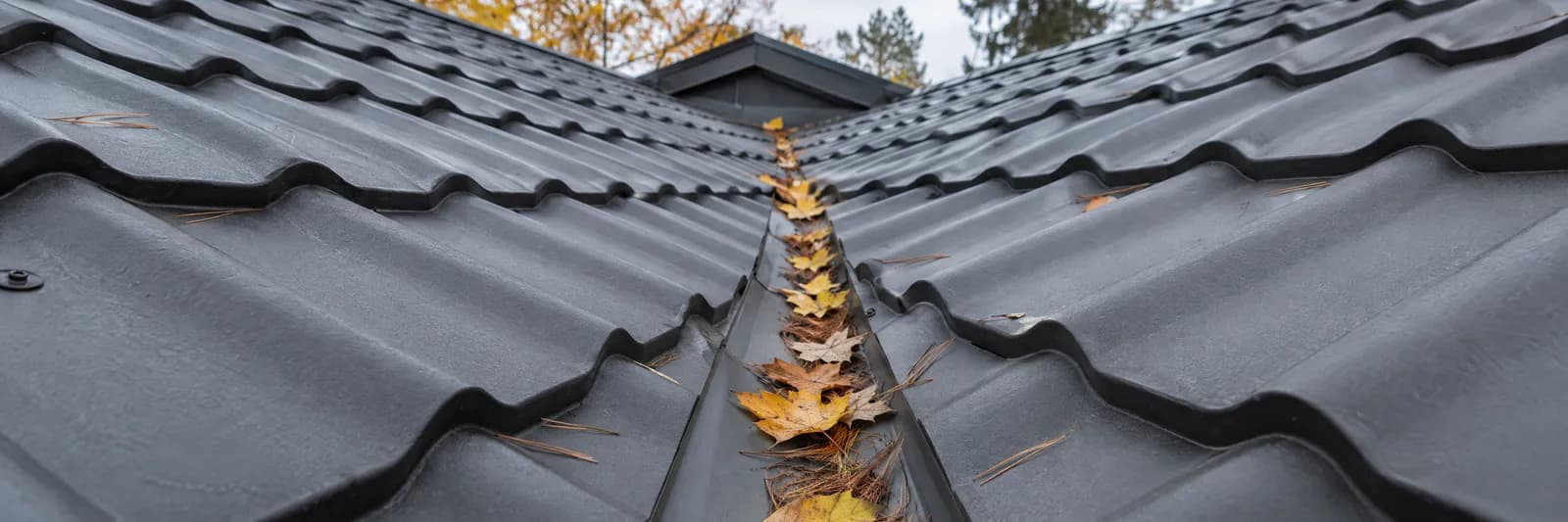
- Valleys. They carry more water than anywhere else, and debris makes it back up under the roofing.
- Walls and dormers. Where a roof meets a wall, flashing that is missing or tucked the wrong way sends water behind the cladding.
- Damaged roofing. Lifted shingles, missing tabs or, on metal roofs, loose fasteners or trim.
Where a metal roof keeps water out explains how each of these details is meant to work.
Things that look like leaks but are not
- Condensation. Warm, moist air from the house meets a cold roof deck and condenses. In winter it builds up as frost and then drips on the first mild day, looking exactly like a leak. Damp all over the deck rather than in one trail is the giveaway. Stop condensation on your metal roof explains it.
- Ice dams. Water backed up behind ice at the eaves gets under roofing that is perfectly sound. The fix is in the attic, not the roof. See ice dams.
- Overflowing eavestroughs. Water spilling behind a blocked trough can get into the soffit and the top of the wall and show up indoors.
- Plumbing and HVAC. A bathroom fan venting into the attic, or a dripping pipe, can stain a ceiling just as well.
What to note before you call
A roofer can find a leak much faster with a few details from you:
- When it leaks: every rain, only heavy rain, only with wind from one direction, or only during a thaw.
- Where the stain is, and photos of it and of anything you saw in the attic.
- How old the roof is and whether that area has been repaired before.
- Whether anything changed recently: new equipment on the roof, a storm or other work done nearby.
Wind-driven leaks point to flashings and edges. Thaw-only leaks point to ice dams or condensation. Leaks every time it rains point to a hole.
Highland does leak tracing and repairs on metal and other roofs, including ones we did not install. Send us what you have noticed, with photos if you can.