The Highland blog
Getting Your Roof and Eavestroughs Ready for Winter
By Highland Roofing3 min read
Winter is when a roof earns its keep, and when problems that were small in the summer turn into water on the ceiling. Most of those problems are visible in October if you know where to look. An hour now, mostly from the ground, is cheap insurance.
From the ground
Walk around the house with binoculars on a clear day and look for:
- Missing, lifted or damaged roofing. On a shingle roof, lifted tabs and bare patches. On a metal roof, a lifted trim, a loose panel edge or anything that looks out of line.
- Flashings. Around the chimney, at walls, around skylights and vents. Gaps, missing pieces or cracked sealant are worth dealing with before snow sits against them for four months.
- Snow guards, if your roof has them. Check that none have been bent or moved. On a metal roof they stop snow coming off in one slab over doorways and walkways; where the snow goes explains why Highland fits them as standard.
- Branches. Anything that overhangs the roof will load up with snow and ice. Have it trimmed now rather than waiting for it to come down in a storm.
Eavestroughs and downspouts
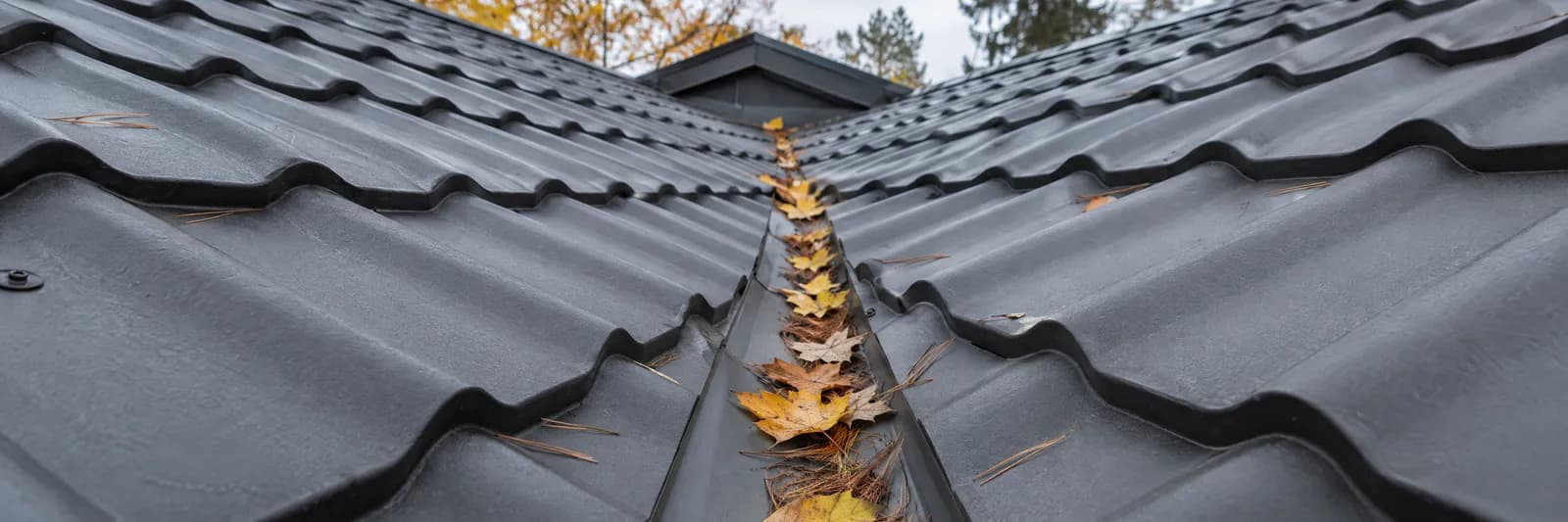
This is the one job that matters most in autumn. Clear the troughs after the leaves have come down, not before, and flush each downspout to make sure water runs right through.
A trough full of wet leaves freezes solid. Meltwater then has nowhere to go and backs up behind the fascia or over the front. Check the hangers too: a trough full of ice is heavy, and loose hangers give way. Cleaning eavestroughs has the full checklist.
Make sure downspouts discharge away from the house. Water dumped beside the foundation in a winter thaw ends up in the basement.
In the attic
The attic is where most winter roof problems really start, and it is the check most people skip.
- Look for daylight where there should not be any, and for old water stains on the underside of the deck.
- Check that soffit vents are not blocked by insulation. Air needs to come in at the eaves and leave at the ridge.
- Look at the insulation. Thin or missing patches, especially near the outside walls, let heat into the roof that melts snow from below.
- Bathroom and kitchen fans should vent outdoors, not into the attic.
Heat leaking into the attic is what causes ice dams. Ice dams: what a roof can and cannot fix goes into it. Once the cold sets in, a look at the underside of the roof deck for frost will tell you a lot about how much warm, moist air is getting up there. Condensation covers what frost and drips mean.
Cottages
A cottage roof spends winter with nobody watching it. Closing up is the time to do everything above, plus make sure someone can check on the place after big storms. Your cottage roof spends winter alone covers what to arrange before you leave.
What not to do yourself
Do not go on the roof once there is frost, ice or snow on it, and be careful even on a dry autumn day, especially on metal. Do not try to fix flashings with a tube of sealant from the hardware store; it usually traps water rather than stopping it. And do not leave a known problem until spring hoping it will hold.
If anything on your walk-around worries you, tell us what you have found. Highland does repairs and inspections on roofs we did not install as well as our own, and autumn is the time to get them done.